Presently, more than 33% of nations assign less than 1% of their total health spending plans to psychological health, with another 33% costs simply 1% of their spending plans on mental health. A minimal series of medications is suffi cient to deal with the majority of mental illness. About 25% of nations, however, do not have the 3 most frequently recommended drugs used to treat schizophrenia, anxiety and epilepsy at the main healthcare level.
The bad often bear the higher concern of mental conditions, both in terms of the danger in having a mental illness and the absence of access to treatment. Continuous direct exposure to badly difficult events, harmful living conditions, exploitation, and bad health in general all contribute to the higher vulnerability of the bad.
The report states brand-new knowledge can have an incredible influence on how people, societies and the public health community offer with psychological disorders. We now know that big mental institutions no longer represent the very best alternative for patients and Visit this website households. Such institutions cause a loss of social skills, extreme constraint, human rights infractions, dependency, and decreased chances for rehabilitation.
In the face of this understanding, a failure to act will show a lack of commitment to resolve mental health issue," said Dr Benedetto Saraceno, Director of WHO's Mental Health and Compound Dependence department. The policy directions have never been so clear, says WHO. Federal governments who are simply starting to attend to mental health will need to set priorities.
WHO's message is that every nation, no matter what its resource restraints, can do something to improve the psychological health of its individuals. What it requires is the courage and the dedication to take the essential steps. The report belongs to a year-long project on psychological health. For the first time, several events at WHO including its premier report, technical conversations at the World Health Assembly and World Health Day, have all concentrated on one topic psychological health.
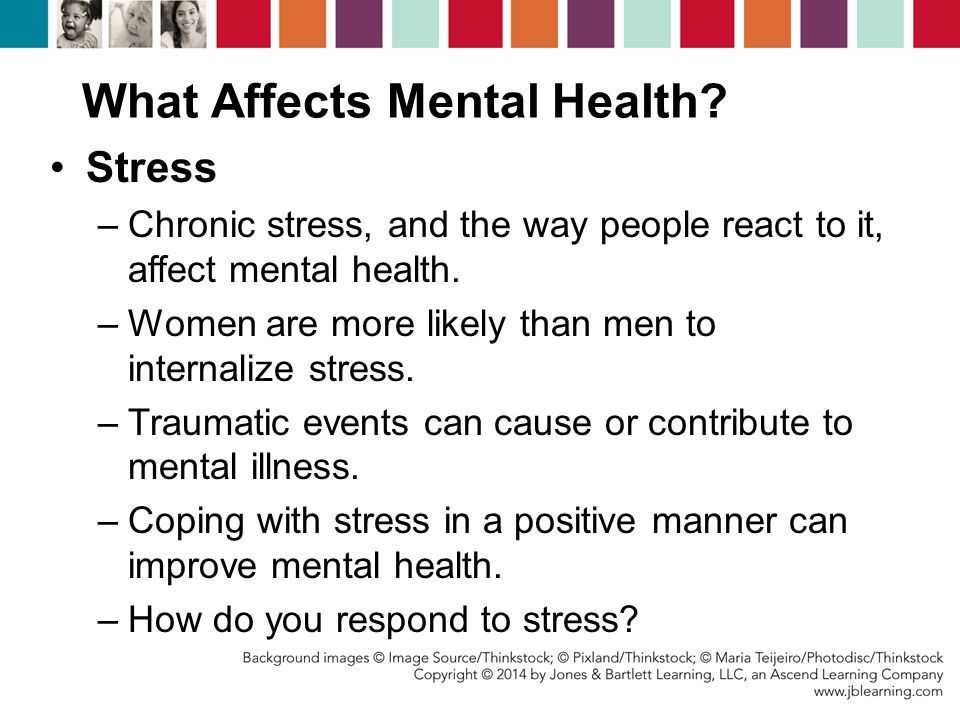
Psychological illness can affect lots of areas of trainees' lives, minimizing their quality of life, scholastic achievement, physical health, and satisfaction with the college experience, and negatively affecting relationships with good friends and household members. These issues can also have long-term repercussions for students, affecting their future work, earning prospective, and overall health.
A Biased View of How Does School Affect Childrens Mental Health
2 Research recommends that anxiety is associated with lower grade point averages, which co-occurring depression and anxiety can increase this association. 2 Depression has actually also been linked to leaving of school. 2 Numerous university student report that mental health problems interfere with their studies. On the American College Health Association 2015 study, college students identified the following psychological health problems as adversely affecting their academic efficiency within the last 12 months:3 Tension (30% of students) Anxiety (22%) Sleep difficulties (20%) Depression (14%) Peers, member of the family, faculty, and staff might be personally affected out of concern for these trainees.
Suicide and suicidal ideas can impact the bigger campus community. Roomies, peers, professors, and personnel likewise experience profound grief over student suicides and suicidal habits. Schools feel the concern when students with mental health difficulties do improperly on course work and leave of school. Institution of higher learnings must be prepared to attend to the psychological effect of suicides on other trainees, along with on instructors and staff.
The neighborhood is adversely impacted when trainees are unable to complete their degrees and contribute important abilities in a competitive job market (how does culture affect mental health). One research study found that 5 percent of students do not finish their education due to psychiatric conditions and approximated that 4. 29 million people would have graduated from college had they not been experiencing such disorders.
E., Golberstein, E., & Hefner, J. L. (2007 ). Occurrence and correlates of depression, stress and anxiety, and suicidality amongst college student. American Journal of Orthopsychiatry, 77( 4 ), 534542. Eisenberg, D., Downs, M., & Golberstein, S. (2009 ). Preconception and help-seeking for psychological health amongst university student. Medical Care Research and Review, 66( 5 ), 522541. American College Health Association.
National College Health Evaluation II: Spring 2015 referral group executive summary. Hanover, MD: Author. Recovered from http://www. acha-ncha. org/reports _ ACHA-NCHAII. html. Meilman, P. W., & Hall, T. M. (2006 ). Aftermath of awful occasions: The development and usage of neighborhood support meetings on a university school. Journal of American College Health, 54( 6 ), 382384.
C., Foster, C. L., Saunders, W. B., & Stang, P. E. (1995 ). Social repercussions of psychiatric disorders, I: Educational achievement. American Journal of Psychiatry, 152( 7 ), 10261032.
The Single Strategy To Use For How Does Social Media Negatively Affect Your Mental Health
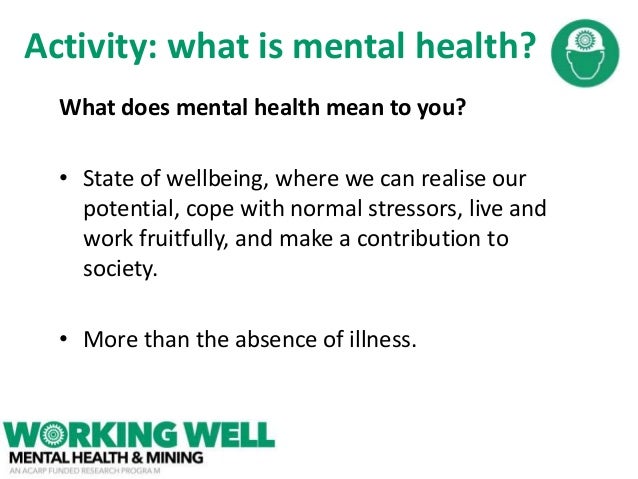
Mental disorders affect 19% of the adult population, 46% of teenagers and 13% of children each year. Individuals having a hard time with their mental health may be in your household, live next door, teach your kids, operate in the next cubicle or sit in the same church pew. However, only half of those affected get treatment, frequently because of the stigma connected to mental health.
A psychological health problem is a that triggers disturbances in thinking, behavior, energy or emotion that make it difficult to deal with the common demands of life. Research is starting to discover the complicated reasons for these diseases which can include genes, brain chemistry, brain structure, experiencing injury and/or having another medical condition, like heart problem.
Mood conditions, such as depression and bipolar depression, affect nearly 10% of grownups each year and are defined by problems in controling one's mood. Although the general perception of mental disorder has enhanced over the previous years, research studies reveal that stigma against mental disorder is still powerful, largely due to media stereotypes and illiteracy, which individuals tend to connect unfavorable stigmas to psychological health conditions at a far higher rate than to other diseases and specials needs, such as cancer, diabetes or heart illness.
Preconception and false information can seem like overwhelming barriers for someone who is having a hard time with a psychological health condition. Here a few effective things you can do to assist: gets rid of a considerable barrier to successfully coping with their illness. Having people see you as an individual and not as your disease can make the biggest distinction for somebody who is having a hard time with their psychological health.
permits us to provide useful support to those affected in our households and communities. Fantastic sources for mental health news and info consist of: Jean Holthaus, LMSW, LISW has actually been supplying outpatient treatment services considering that 1995 when she earned her Masters of Social Work degree from the University of Iowa. She has worked for Pine Rest because 1997.
Mental, Drug Rehab Center neurological and compound utilize conditions (MNS) prevail, extremely disabling, and associated with substantial premature http://edwinvlgg152.huicopper.com/5-simple-techniques-for-how-does-mental-work-environment-affect-employees mortality. The human, social and financial toll enforced by absence of attention to MNS across the world is considerable. It is approximated that at least 10 percent of the world's population is impacted, and that 20 percent of children and teenagers experience some type of mental condition.